

Research Framework
We understand human flourishing as an emergent property of sustained participation within living systems.
Integrating Indigenous knowledge, neuroscience, psychology, systems science, philosophy, and ecology to develop a new interdisciplinary framework for human flourishing.
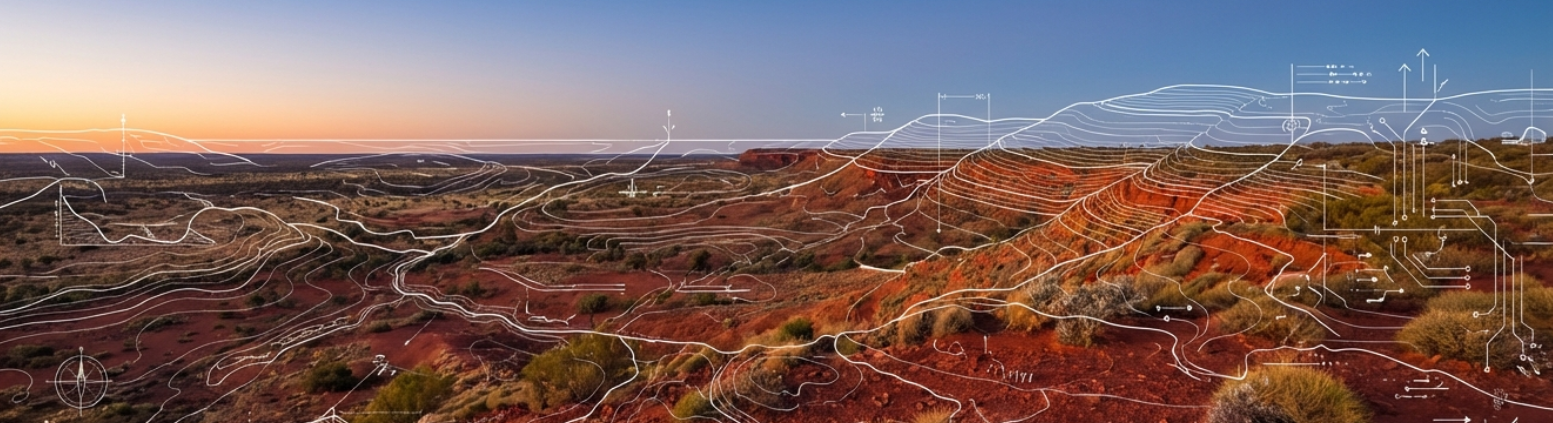
Belonging
How do living systems belong in relationship?
Belonging explores how life emerges and develops within relationships. People, communities, cultures, and ecosystems are formed through relationships with others, places, knowledge, ancestry, and the wider living world. We investigate how belonging gives rise to identity, meaning, responsibility, care, and the conditions through which life can flourish.
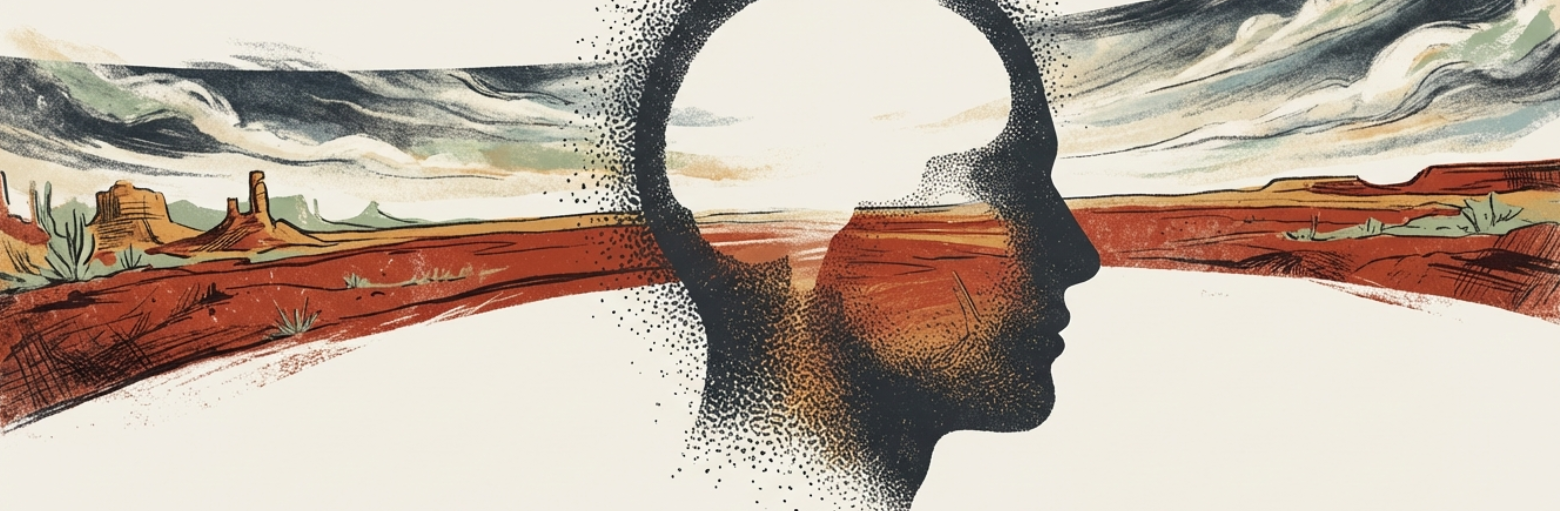
Participation
How do living systems participate in relationship?
Participation explores how living systems become through relationship. People, communities, cultures, and ecosystems develop through ongoing participation with others, places, knowledge, and the wider living world. We investigate how participation shapes identity, meaning, creativity, responsibility, and flourishing.

Continuity
What continues across time and change?
Continuity investigates how life persists and regenerates through change. We study the processes through which knowledge, identity, relationships, memory, responsibility, and living organisation endure and are renewed across individuals, communities, cultures, and generations. Continuity provides the temporal foundation through which belonging and participation can remain living and generative across changing forms.
Research
Toward a Science of Human Flourishing
Understanding how belonging, participation, and continuity give rise to flourishing across persons, communities, cultures, and living systems.
Integrating Indigenous knowledge, neuroscience, psychology, systems science, philosophy, and ecology to develop a new interdisciplinary framework for human flourishing.
Featured Research
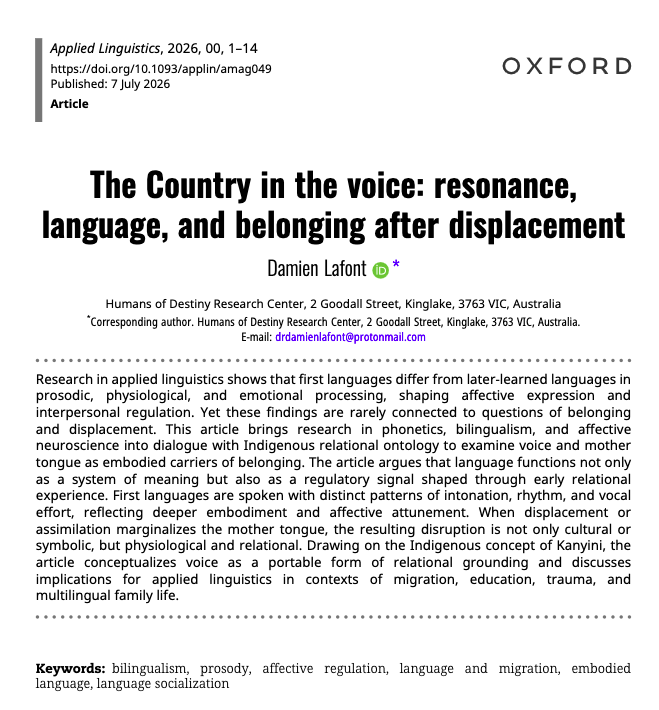
Our latest peer-reviewed research, published in Applied Linguistics (Oxford University Press). Explore how language, voice, and belonging remain connected across generations.
The Country in the Voice: Resonance, Language, and Belonging After Displacement
Applied Linguistics, July 2026, doi.org/10.1093/applin/amag049
Exploring the Field of Deep Belonging together
Understanding grows through relationship. The Field of Deep Belonging brings together researchers, Indigenous knowledge holders, scientists, educators, artists, and practitioners exploring the conditions through which people, communities, and living systems flourish.

Could this be you?
If this field resonates with your work, we’d love to hear from you.
We as humans have been given the Law of Tjukurrpa (Dreaming) to apply Kanyini to all others. It’s a great responsibility and it takes great love. We hold Kanyini in our hearts and souls. It is actually a kinship, a relationship; it is enormous caring with no time or limit; it is eternal.
Uncle Bob Randall
Indigenous “Tjilpi” elder of the Yankunytjatjara Aboriginal Nation of Central Australia
Caretaker of the desert area that includes the special sites, Uluru and Kata Tjuta
01
Deep Belonging
Exploring relationships with Country, community, culture, kinship, and the living world.
What does it mean to belong?
Research Questions
- What does it mean to belong?
- How do humans participate in relationships with Country, community, culture, and the living world?
- How does belonging influence identity, wellbeing, and human flourishing?
- How do Indigenous knowledge systems deepen our understanding of relationship and responsibility?
- How do dialogue, reciprocity, and care transform communities?
- What conditions allow belonging to emerge, persist, or fracture?
- Can belonging become a foundation for ecological and social renewal?
Current Research
Country and identity
Migration and belonging
Dialogue and relationality
Community wellbeing
Loneliness and social connection

02
Purpose and Human Development
Understanding how purpose, identity, creativity, and human potential emerge across the lifespan.
How does purpose emerge?
Research Questions
- How does purpose emerge throughout life?
- What enables people to discover and embody their unique contribution?
- How do calling, vocation, and destiny shape human development?
- How do recognition and encouragement influence human potential?
- How do creativity, adversity, and transformation contribute to personal growth?
- Can human development be understood as increasing participation in life?
- What conditions allow individuals and communities to flourish?
Current Research
Purpose and destiny
Human development
Recognition
Hero’s journey
Patterns of emergence
Human potential

03
Continuity and Transmission
Investigating how knowledge, identity, memory, and responsibility continue across generations.
What continues across time?
Research Questions
- What continues across time?
- How is knowledge transmitted between generations?
- How do stories preserve identity and culture?
- How do language, memory, and place sustain continuity?
- What responsibilities do we carry toward future generations?
- How do communities maintain continuity while embracing change?
- How can continuity strengthen resilience in times of disruption?
Current Research
Migration and continuity
Language as homeland
Meaning as transmission
Story fields
Ancestral futures
Death and continuity

04
Consciousness and Psyche
Exploring consciousness, psyche, healing, and transformation from relational and participatory perspectives.
What is consciousness?
Research Questions
- What is consciousness?
- How does consciousness participate in a living reality?
- How are mind, body, relationships, and environment interconnected?
- What role do coherence and participation play in psychological wellbeing?
- How do healing and transformation emerge?
- What can altered states, dreams, and near-death experiences reveal about consciousness?
- How do relationships shape mental health and identity?
Current Research
Consciousness studies
Archetypes
Relational psyche
Mental health
Near-death experiences
Healing and restoration
05
Creativity and Meaning
Investigating creativity, story, language, art, and the emergence of meaning.
How does meaning emerge?
Research Questions
- Why are humans creative?
- How does creativity shape identity and purpose?
- How do stories transform the way we perceive ourselves and the world?
- How do music, rhythm, and the arts cultivate coherence and belonging?
- What role does beauty play in human flourishing?
- How does language shape reality and possibility?
- How do artistic practices generate knowledge that cannot be expressed through concepts alone?
Current Research
Creativity
Story
Language
Aesthetics
Dialogue
Music and meaning

06
Ecology and Regeneration
Exploring relationships between humans, ecosystems, Country, and planetary flourishing.
How can humans flourish with the living Earth?
Research Questions
- What does it mean to live well within the Earth community?
- How do humans participate in living ecosystems?
- What conditions support ecological regeneration?
- How do Indigenous perspectives reshape environmental stewardship?
- How does coherence emerge across ecosystems?
- What can living systems teach us about resilience and adaptation?
- How can regenerative practices restore relationships between people and the Earth?
Current Research
Ecology as belonging
Sustainability
Water
Pollution
Regenerative futures
Climate and living systems
07
Knowledge and Wisdom Traditions
Bringing Indigenous, scientific, philosophical, and spiritual knowledge systems into dialogue.
How do we come to know reality?
Research Questions
- What is knowledge?
- How do different cultures come to know reality?
- What can emerge through dialogue between Indigenous, scientific, philosophical, and spiritual traditions?
- How do different ways of knowing complement one another?
- What makes knowledge trustworthy, transformative, and alive?
- How is wisdom cultivated and transmitted?
- Can a relational understanding of knowledge contribute to the future of science and society?
Current Research
Indigenous knowledge systems
Relational ontology
Epistemology
Science and wisdom traditions
Kanyini and science
Knowledge transmission