
Why The Body Knows Belonging First
Research Focus
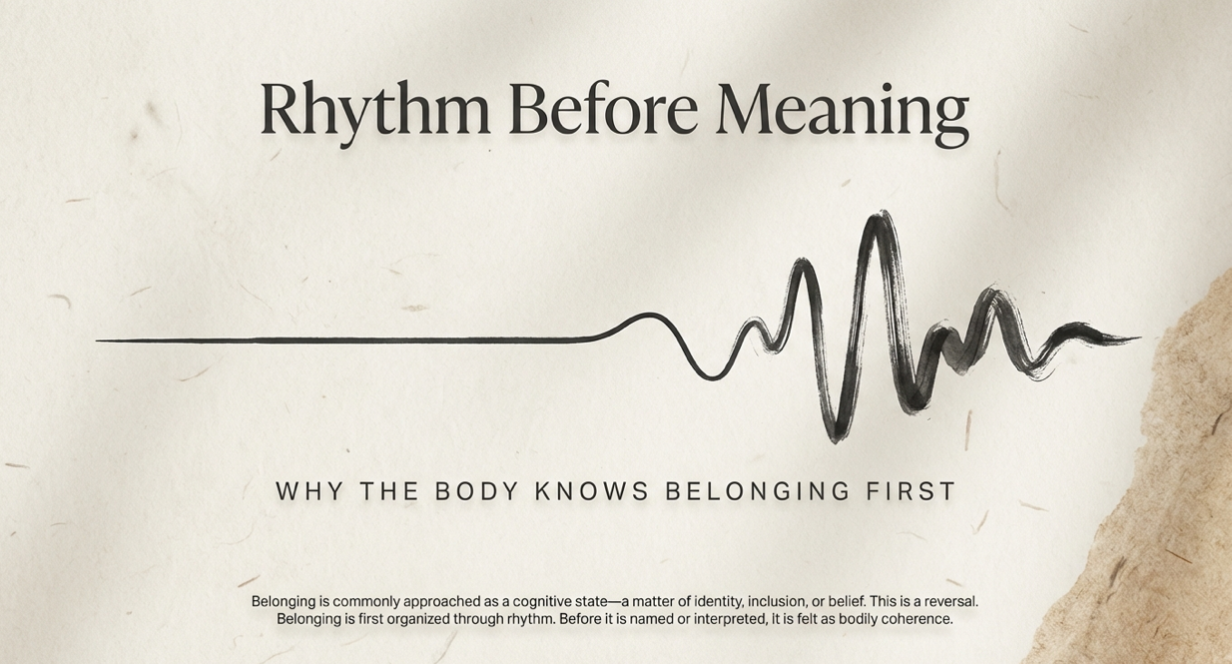
We argue that belonging is fundamentally a rhythmic and bodily experience rather than a product of cognitive thought or social identity. Drawing on Indigenous law and physiological research, we suggests that human connection is first established through synchronized timing, shared movement, and sensory resonance. This perspective redefines loneliness as a state of desynchronization, where an individual’s internal rhythms fall out of alignment with their community and environment. By prioritizing embodied coordination over symbolic meaning, we presents belonging as a temporal infrastructure sustained by repetition and service. Ultimately, we suggest that the body recognizes its place in the world through physical coherence long before the mind interprets that connection.
article
Rhythm Before Meaning
Examines rhythmic entrainment as a pre-linguistic basis for bonding and neural regulation.